You deep-condition for an hour, and your hair still feels like straw. Or you spritz in a light leave-in, and it sits on top in a greasy film that won’t absorb. If either scenario sounds familiar, you’re probably asking what is the difference between high and low porosity hair. The answer explains why your haircare routine seems to work for everyone but you.
Quick answer: High porosity hair has a raised, open cuticle that absorbs moisture fast but loses it just as quickly, while low porosity hair has a tightly closed cuticle that resists water and holds onto products. Most routines fail because people treat all hair the same way. Match your products and techniques to your porosity, and the same products suddenly behave better.
This article explains what porosity is, how the cuticle drives it, and how to identify and care for each type. By the end, you’ll know which adjustments actually matter.
Definition and background
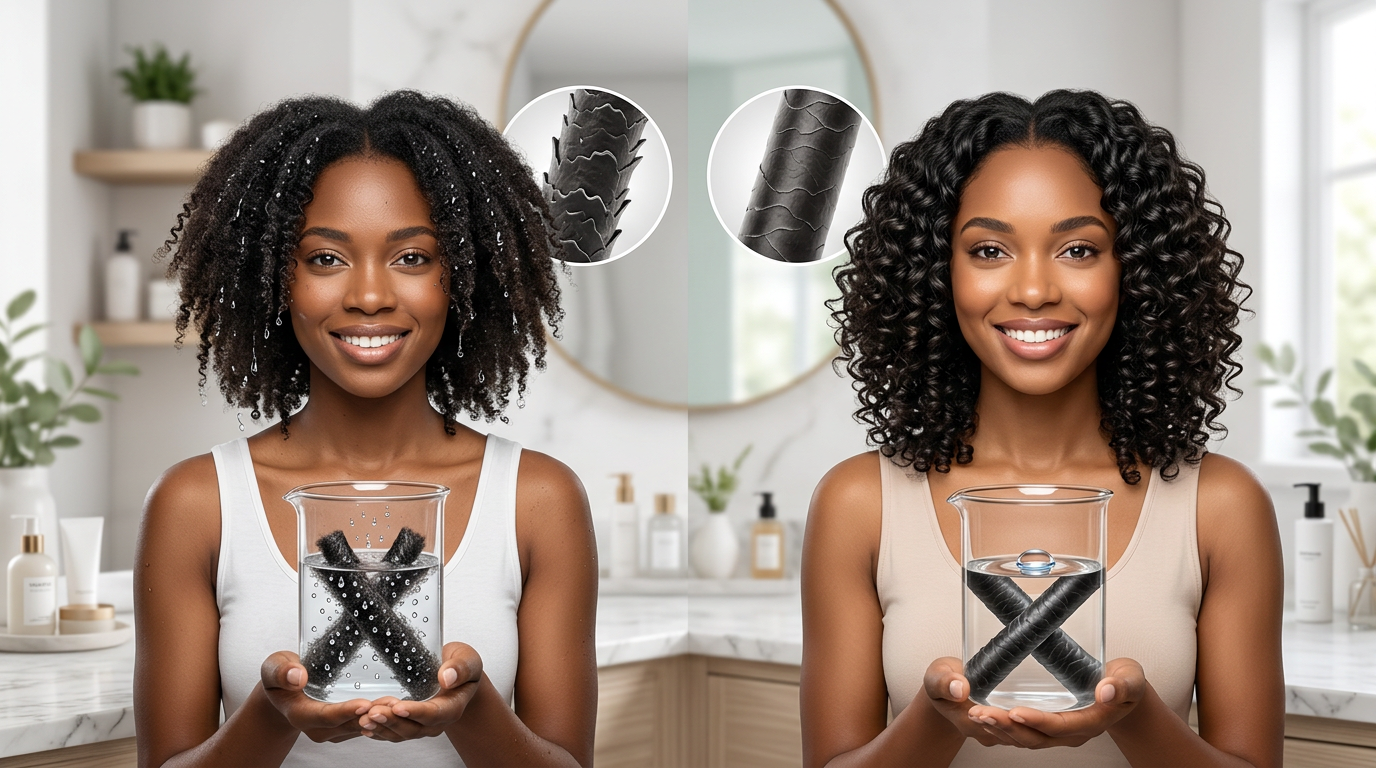
Hair porosity describes how easily your strands absorb and release moisture. It comes down to the cuticle, the outermost layer of each hair fiber. Picture the cuticle as overlapping roof shingles. When those shingles lie flat and tight, water struggles to get in. When they lift or develop small gaps, water slips through quickly.
Porosity also varies along a single strand. The ends have weathered more washing, brushing, and sun than the roots, so they often test higher even on hair that is low porosity overall. This gradient explains why the same product can behave differently from scalp to tip and why many people find success treating the lengths more intensively than the roots.
The three porosity levels
Most experts group porosity into three levels:
- Low porosity: a tight, flat cuticle that repels water and holds moisture in once it’s there.
- Normal (medium) porosity: a balanced cuticle that absorbs and retains moisture reasonably well.
- High porosity: a raised or damaged cuticle with gaps that let moisture escape fast.
Your hair’s porosity isn’t a fixed personality trait. Age, heat styling, coloring, chemical straightening, and sun exposure all shift it upward over time. The American Academy of Dermatology notes that wet hair is more fragile, and repeated wet manipulation adds wear to the cuticle — relevant for every porosity type.
Why porosity became a hairstyling category
Porosity itself is a materials concept. In textile testing, porous fabrics absorb and dry faster than tight weaves. Curly-hair communities adapted this idea in the 2010s, and it stuck because it explained a real frustration: two people can use identical products with opposite results.
Why it matters for your routine
Porosity shapes which products work, how you cleanse, how much protein your hair tolerates, and how you dry it. A heavy butter that rescues high porosity hair can weigh down low porosity strands for days. A lightweight mist that flatters low porosity hair may vanish from high porosity hair by lunchtime. In our testing, the same curl cream on the same day gave two different results across porosity types — a small clue that products are rarely the whole story.
How what is the difference between high and low porosity hair works
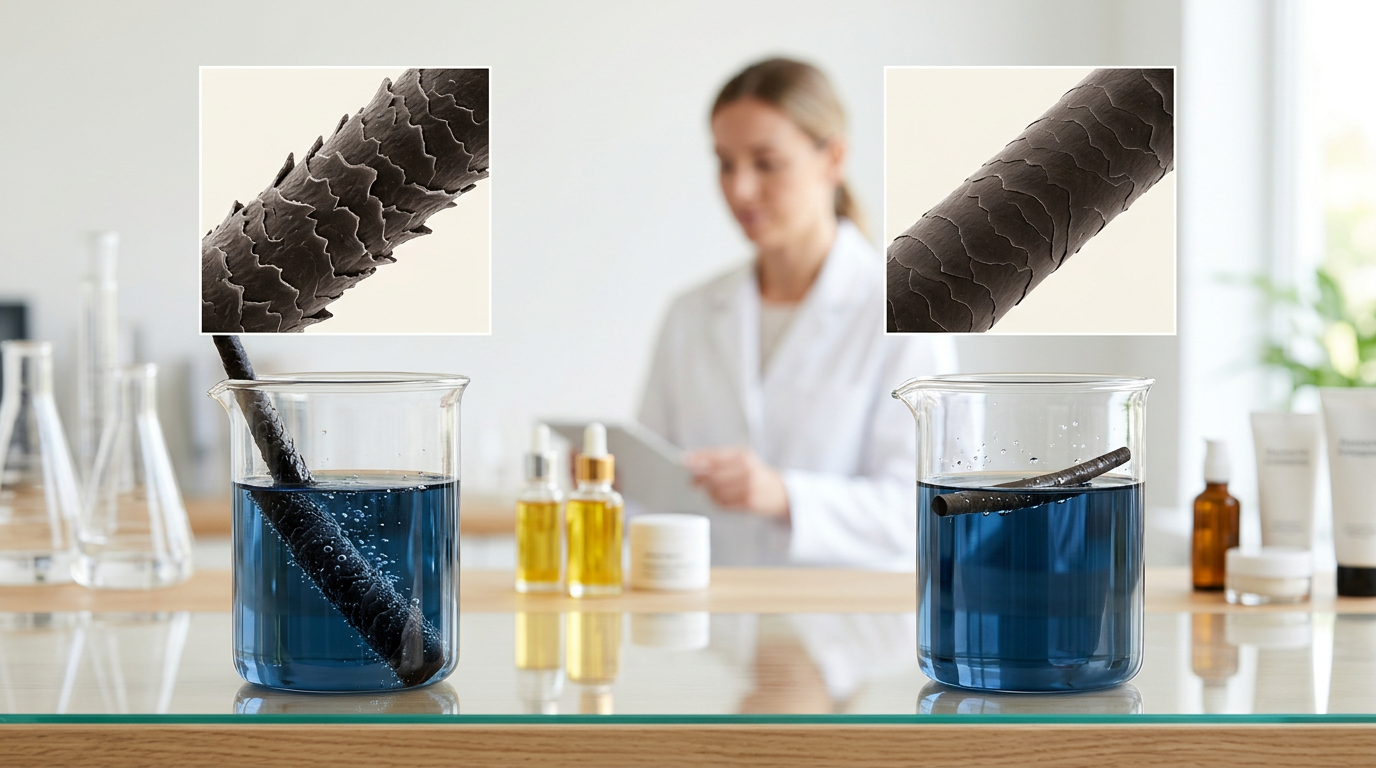
The core mechanism is the cuticle’s position. Flat shingles slow water down; lifted shingles let it pass. That single difference drives nearly every practical distinction between the two types.
Think of the two types as doors that open at different speeds. High porosity needs little force to open, so water enters on contact; the challenge is keeping it from swinging open again and letting moisture escape. Low porosity needs a deliberate push, such as heat or prolonged contact, before anything gets through. That is why the same leave-in can vanish into high porosity hair and sit heavy on low porosity hair. The gap between what enters and what stays is the whole story behind what is the difference between high and low porosity hair.
Absorption and barrier behavior
High porosity hair behaves like a sponge with a loose weave. Water and water-based products soak in quickly, which is why such hair often dries in minutes after a wash. Once inside, however, moisture escapes just as readily through the same gaps. Low porosity hair behaves more like a sealed jar. Product may bead on the surface for a while, but once it penetrates, it stays.
How high porosity hair reacts to products and water
High porosity strands welcome water and lightweight conditioning. Proteins and oils can temporarily fill the gaps, smoothing the surface and slowing moisture loss. Overuse of protein, though, risks stiffness and brittleness, so balance matters.
How low porosity hair reacts to products and water
Low porosity hair needs heat and time. Steam, warm water, and a plastic cap help open the cuticle enough for products to penetrate. Heavy oils and thick butters often sit on the surface, creating buildup.
Testing porosity at home
The float test is the most common DIY method. Drop a clean shed strand into a glass of water. If it floats for several minutes, porosity is likely low; if it sinks fairly quickly, porosity is likely high. We found results vary with product residue, so test a freshly clarified strand. Observing how fast your hair wets and dries is a more reliable sign.
Real-world examples
Abstract definitions only go so far. Here’s how porosity shapes everyday hair experiences.
Consider someone who swims weekly in a chlorinated pool. The chlorine and repeated wetting push porosity upward on the canopy and ends, so a routine that worked a year ago now leaves the hair crunchy. Swapping in a pre-swim conditioner and a post-swim leave-in restores much of the softness. Or take a person who heat-styles daily with a flat iron at high settings: the ends may act high porosity while the crown stays low. Checking a shed strand from each zone tells you where to concentrate treatment.
A low porosity wash day
Imagine washing hair that takes forever to get fully wet. Shampoo lathers slowly, and conditioner seems to sit on top. After styling, the hair looks weighed down at the roots. The fix is to apply conditioner to damp hair with gentle heat and to choose a lightweight formula. Low porosity hair also tends to resist color and chemical treatments, so salon processing may take extra time.
A high porosity wash day
Now picture the opposite. Water soaks in instantly, but the hair feels rough and dry within hours of styling. Color fades quickly, and frizz appears in humid weather. Layering a leave-in conditioner with a light oil seal helps lock moisture in. High porosity hair often needs gentler cleansing to avoid stripping it further.
Mixed porosity in one head
Many people have more than one porosity level on one head. Heat-damaged lengths may act high porosity while the roots stay low porosity. Section your routine accordingly: treat the porous mid-lengths more intensively and keep the roots lighter.
Why protein and moisture balance feels different
We’ve seen high porosity hair respond well to a protein-moisture routine, while low porosity hair often thrives on moisture with minimal protein. The reason is simple: protein fills gaps that low porosity hair doesn’t have.
Common misconceptions
Porosity is widely discussed and widely misunderstood. Here are the myths we hear most.
One persistent myth holds that you can permanently “fix” high porosity hair with a single deep-conditioning mask. Cuticle gaps are structural, and no rinse-out product closes them for good. What a mask does is temporarily smooth the surface and add flexibility, which is still worthwhile but needs repeating with each wash. A related misunderstanding is that porosity is the same as curl pattern. A loose wave can be highly porous, and a tight coil can be low porosity; texture describes shape, while porosity describes the cuticle’s condition. Many people also assume porosity is fixed for life, yet it can shift after a single bleach session or a summer of sun exposure.
“High porosity hair is always damaged”
Not true. Some hair is naturally porous due to texture and genetics, and damage just accelerates existing porosity. Labeling all high porosity hair as damaged leads to unnecessarily aggressive repair routines.
“Low porosity hair is always healthy”
A tight cuticle is not automatically a good thing. Product buildup, hard water minerals, and heavy styling products can seal low porosity hair and make it feel coated and dull. Clarifying matters here.
“The float test is definitive”
The strand test gives a hint, not a verdict. Residual oils or conditioner change how a strand floats, and a single strand may not represent your whole head. Use the test as one signal among several.
“You need a different product for every porosity type”
Porosity primarily affects application technique, not the product shelf. The same conditioner can perform well on both types if you adjust water temperature, time, and amount.
“Protein is harmful to all curly hair”
Protein benefits high porosity hair by filling cuticle gaps. Only low porosity hair with protein sensitivity needs to limit it.
FAQ
How can I tell my hair porosity without a strand test?
Watch how your hair behaves in the shower. If it wets and dries quickly, high porosity is likely. If water beads and products take ages to absorb, low porosity is likely. These signs are often clearer than the float test.
Is it possible for porosity to change over time?
Yes. Heat tools, coloring, and chemical treatments raise porosity, which is usually permanent until new hair grows. Gentle routines can’t reverse structural change, but they can slow further damage.
Which porosity type is harder to manage?
Most people find high porosity harder to keep moisturized because it loses water so quickly. Low porosity is easier to hydrate but harder to get products into. Both need technique adjustments rather than expensive swaps.
How often should low porosity hair be clarified?
Depending on your product use, clarifying every two to four weeks is a reasonable starting point. If your hair feels coated or stiff, clarify sooner. Over-clarifying strips moisture, so adjust to your hair’s response.
Do I need separate products for high and low porosity hair?
No. Focus on technique: use heat and time for low porosity, and layer lightweight moisture plus a seal for high porosity. Most shelves already contain what you need.
Conclusion
The difference between high and low porosity hair comes down to the cuticle. High porosity hair absorbs and loses moisture fast, so it needs sealing and gentle care. Low porosity hair resists moisture, so it needs heat, time, and lightweight products. Neither type is better, and both respond to technique more than to pricey products.
Your next step: run a quick water test on a freshly washed strand, then adjust one habit this week. Use a plastic cap with warm conditioner if your hair resists moisture. Add a light sealing oil if it dries too fast. Small changes beat a shelf full of new products.