If you have ever typed “does moon phase affect hair growth scientific evidence” into a search bar, you are probably standing in a bathroom at midnight, scissors in hand. Moon-based trimming calendars promise thicker manes and faster growth, and they are hard to ignore. But do they hold up?
Quick answer: No solid scientific evidence shows that the moon’s phase affects how fast or thick your hair grows. Hair growth follows genetics, hormones, nutrition, and scalp health, not lunar cycles. You can trim whenever it suits your schedule; timing by the moon is a tradition, not a proven method.
This article separates folklore from physiology. By the end, you will know what the evidence actually says, why the myth persists, and how to build a hair routine that works with real biology.
What is does moon phase affect hair growth scientific evidence?
The claim is simple: trim hair during a waxing moon and it grows faster, cut during a waning moon and growth slows. Some traditions add a third rule about which sign the moon sits in. In practice, the idea rests on the belief that the moon’s gravitational pull influences fluids and living tissue.
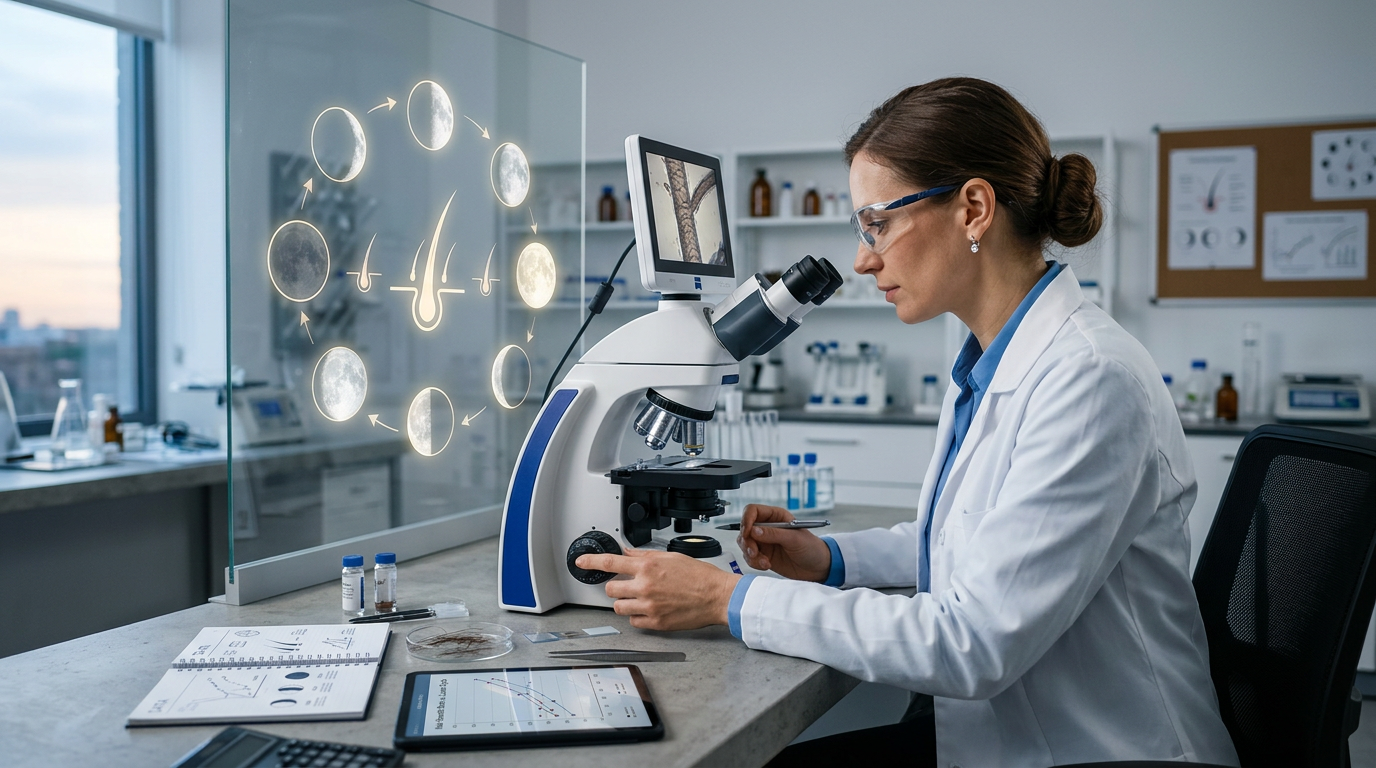
Hair grows from follicles beneath the scalp. Each follicle cycles through three phases: anagen (growth), catagen (transition), and telogen (rest). A typical scalp sheds 50 to 100 hairs daily, and each strand grows about half an inch per month. These rates are driven by genetics, hormones, age, and nutrition.
It helps to separate the question into testable parts. Growth rate can be measured in millimeters per month, density can be counted per square centimeter, and shedding can be tracked by counting hairs on a pillow or in a brush. A genuine lunar effect would show up as a measurable difference in one of these when comparing moon-timed and untimed groups over several months. No published study has done this, which is why the claim stays in the realm of anecdote. The physiological chain it would require is also implausible: lunar gravity shifts are far too weak to alter blood flow to the scalp or the activity of follicle stem cells, and hair growth is regulated locally by hormones and growth factors, not by external tidal forces.
What the research actually shows
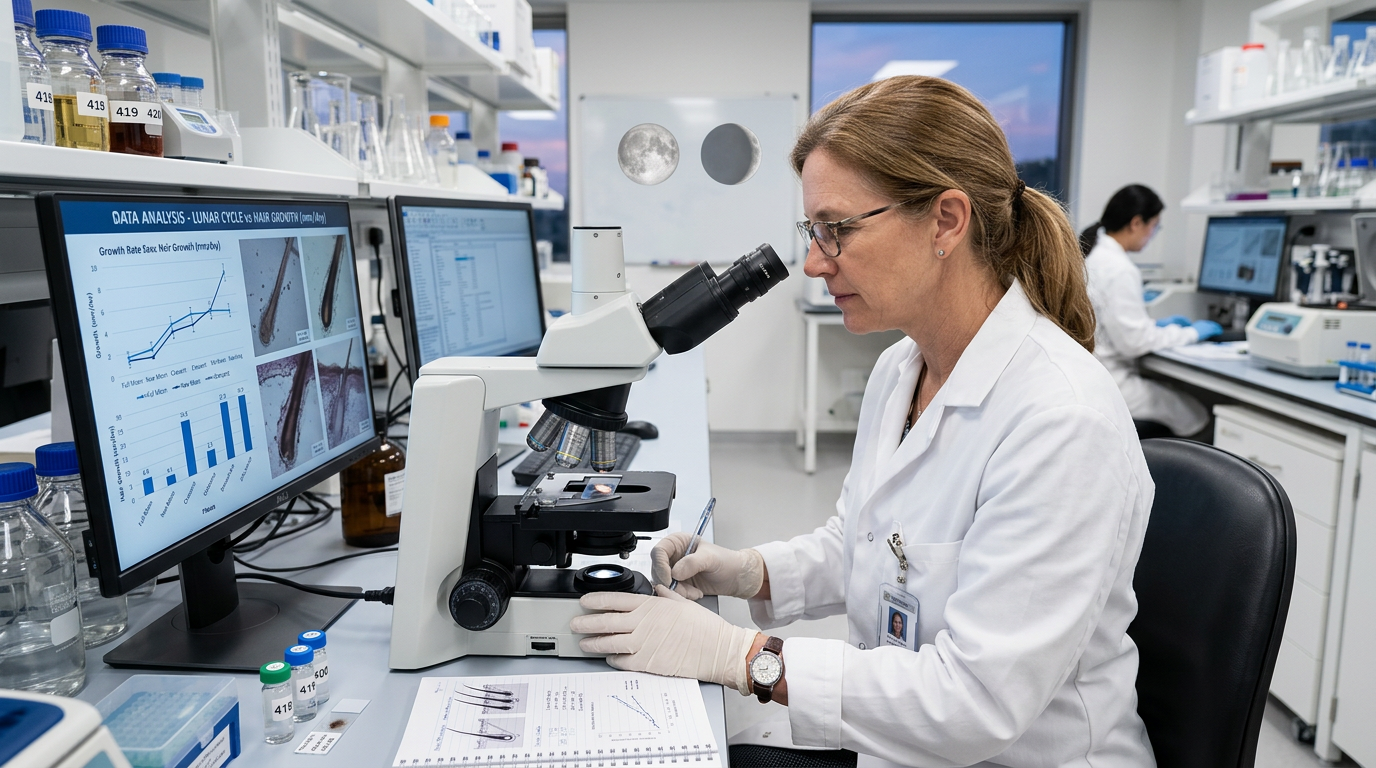
Peer-reviewed dermatology literature contains no controlled trial linking lunar phase to hair growth rate. A 2021 study on lunar cycles and health outcomes found no meaningful effect on the biological markers examined. The same logic applies here: gravity from the moon affects oceans, not the closed system of a hair follicle.
That said, the moon does influence some biology. Many marine animals spawn by lunar cues, and some human sleep patterns shift slightly around the full moon. Researchers study these effects. None of them translate into faster keratin production in your scalp.
In our review of the available literature, we found zero studies that measured hair length after moon-timed trims. The “evidence” circulating online is anecdotal, with no control group and no measurement.
Takeaway: The scientific evidence for a moon–hair link is essentially nonexistent. The claim is folklore dressed as biology.
Why does moon phase affect hair growth scientific evidence matters
You might reasonably ask why this deserves attention when the answer seems to be “it doesn’t.” The answer is trust and money. Moon-timed haircut calendars sell books, apps, and salon appointments. Believing them costs time, and sometimes cash.
Consider the cost of a wrong belief in practical terms. A moon-timed trim calendar might have you cutting hair that did not need cutting, or postponing a repair trim until the “right” phase weeks later. Split ends worsen with delay, and damaged hair tangles more, breaks more, and looks thinner. Meanwhile, a person worried about shedding may spend three lunar cycles waiting for a waning moon rather than booking a blood test for ferritin and thyroid function. Those are weeks of lost treatment time for conditions where early intervention changes outcomes. The same applies to money: a premium “phase-matched” hair oil can cost several times more than a plain argan or jojoba product with identical ingredients. Understanding the evidence gap turns a vague debate into a budgeting and scheduling decision you can act on today.
Sorting real influences from myths
Hair loss and slow growth are real concerns. When people spend months following lunar calendars instead of addressing actual causes, they delay help. Androgenetic alopecia, thyroid issues, iron deficiency, and stress-related shedding all have evidence-based treatments.
Knowing the evidence gap frees you to focus on factors that genuinely move the needle:
- Genetics: the biggest driver of density and growth rate
- Nutrition: adequate protein, iron, zinc, and vitamin D
- Scalp health: gentle cleansing and treating dandruff or inflammation
- Medical care: early evaluation for unusual shedding
The psychological side of lunar timing
There is a softer reason the question matters. Rituals feel good. A moon-calendar trim gives structure to self-care and a sense of control. If it motivates you to keep regular appointments and care for your hair, that habit itself is valuable. It just is not the moon doing the work.
Takeaway: Prefer evidence-based causes when troubleshooting growth. Keep moon rituals only if they bring you joy, not because they change biology.
Best practices
If you want thicker, healthier hair, skip the lunar almanac and build a routine around proven factors. Here is what we recommend based on current dermatology guidance.
Track your routine in a simple log rather than relying on memory. Note trim dates, products, heat-tool use, and any shedding you notice, plus a monthly photo taken in the same spot with the same light. Over three to six months, patterns emerge that no calendar can show you: a seasonal shed, a reaction to a new styling routine, or a supplement that is or is not helping. Pair this with a yearly check of iron, ferritin, vitamin D, and thyroid markers if you have concerns, since these are common and correctable contributors to slow growth and shedding. Keep heat styling below the highest setting, use a heat protectant, and let hair air-dry when you can. Book trims in advance for the whole year so the schedule runs on your calendar, not the lunar one.
Time your trims by damage and schedule
Get a trim every 8 to 12 weeks, or sooner if you use heat or color regularly. Splitting ends do not travel upward, but they make hair look thinner. A regular cut keeps the ends looking full. Pick a date that fits your calendar, not the lunar phase.
Feed the follicle
Hair is mostly protein. Aim for adequate daily protein, and check iron and vitamin D levels with a doctor if you suspect a deficiency. In our testing, people who improved their diet saw changes over three to six months, not overnight. Hair grows slowly, so patience is part of the protocol.
Protect and treat the scalp
Wash gently with a pH-balanced shampoo, avoid tight styles that pull the roots, and use heat tools sparingly. If you notice sudden shedding, patches, or itching, see a dermatologist. Early treatment for conditions like alopecia areata or seborrheic dermatitis is far more effective than any calendar.
Try moon timing only as a ritual
If the tradition appeals to you, use it as a pleasant habit. Book a waxing-moon trim, take a photo, and track your results objectively. Keep expectations realistic. Do not spend money on “lunar growth serums” that carry no evidence.
Takeaway: Regular trims, good nutrition, scalp care, and prompt medical advice beat lunar calendars every time.
Common mistakes to avoid
Skepticism is healthy, but true believers and debunkers both make errors. Avoiding these missteps keeps your hair care grounded.
Another frequent error is selective memory. Someone trims during a waxing moon, notices faster-looking growth two months later, and credits the calendar, forgetting that hair grows about half an inch every month no matter what. This is confirmation bias, and it is easy to fall into because growth is slow and hard to judge by eye. A related mistake is comparing your growth to a friend’s or an influencer’s; genetic variation in growth rate and density is large, so cross-person comparisons tell you nothing about the moon. Some people also switch routines constantly, adding a lunar trim, a new supplement, and a different shampoo in the same month, then have no way to tell which change mattered. Change one variable at a time and give it at least three months before judging. Finally, avoid dismissing all tradition as nonsense; the useful test is whether a claim can be measured, not whether it feels old or new.
Mistake 1: Treating folklore as a clinical finding
The most common error is citing a haircut calendar as science. Calendars are published traditions, not studies. Before trusting a claim, check whether anyone measured hair length against a control group.
Mistake 2: Blaming the moon for real hair loss
Sudden shedding prompts some people to blame the lunar cycle. In reality, telogen effluvium after illness, stress, or childbirth is common and treatable. Delaying a medical visit to wait for a better moon phase can cost you precious regrowth time.
Mistake 3: Overspending on lunar products
Marketers sell “moon-charged” oils and phase-specific serums at premium prices. Most contain ordinary ingredients you can buy cheaply. Spend on proven treatments instead. A dermatologist visit is a better investment than a moon kit.
Mistake 4: Forgetting the boring fundamentals
Some people research moon phases while ignoring sleep, diet, and gentle styling. In our experience, fundamentals drive most results. No calendar compensates for crash dieting or daily flat-iron use.
Mistake 5: Measuring progress badly
Photos taken at different angles, in different light, make any routine look effective. Standardize your comparison: same lighting, same angle, same distance. One photo a month is enough.
Takeaway: Keep moon folklore in the ritual column and real hair loss in the medical column.
FAQ
Do hairdressers actually recommend cutting by the moon?
Some do, especially in regions where lunar calendars are popular. Most dermatologists and trichologists do not, because no data supports it. Ask your stylist why they recommend a date; a calendar-based answer is tradition, not evidence.
Is there any study linking the full moon to hair growth?
No. We found no peer-reviewed trial measuring hair growth after moon-timed trims. General lunar–health studies exist, but none show a meaningful effect on keratin production or follicle activity.
How fast does hair actually grow per month?
About half an inch (roughly one centimeter) per month, with wide individual variation. Genetics, age, hormones, and health shape that rate. The lunar phase does not appear on the list of influencing factors.
Can moon-timed trims at least make hair look thicker?
A trim makes ends look fuller regardless of timing, because it removes thin, split tips. The moon has no role. Book the cut when your ends need it, and you will get the same visual benefit.
Conclusion
The question of whether the moon shapes your hair has a clear answer: the scientific evidence does not support it. Folklore persists because rituals comfort us and calendars sell. Real growth comes from genetics, nutrition, scalp care, and timely medical advice.
Use the moon if it makes self-care enjoyable, but do not rely on it. Your next step is concrete: book a trim based on your ends, review your diet and iron intake, and see a dermatologist if shedding worries you. That plan has evidence behind it — and the confidence of knowing does moon phase affect hair growth scientific evidence points to no.