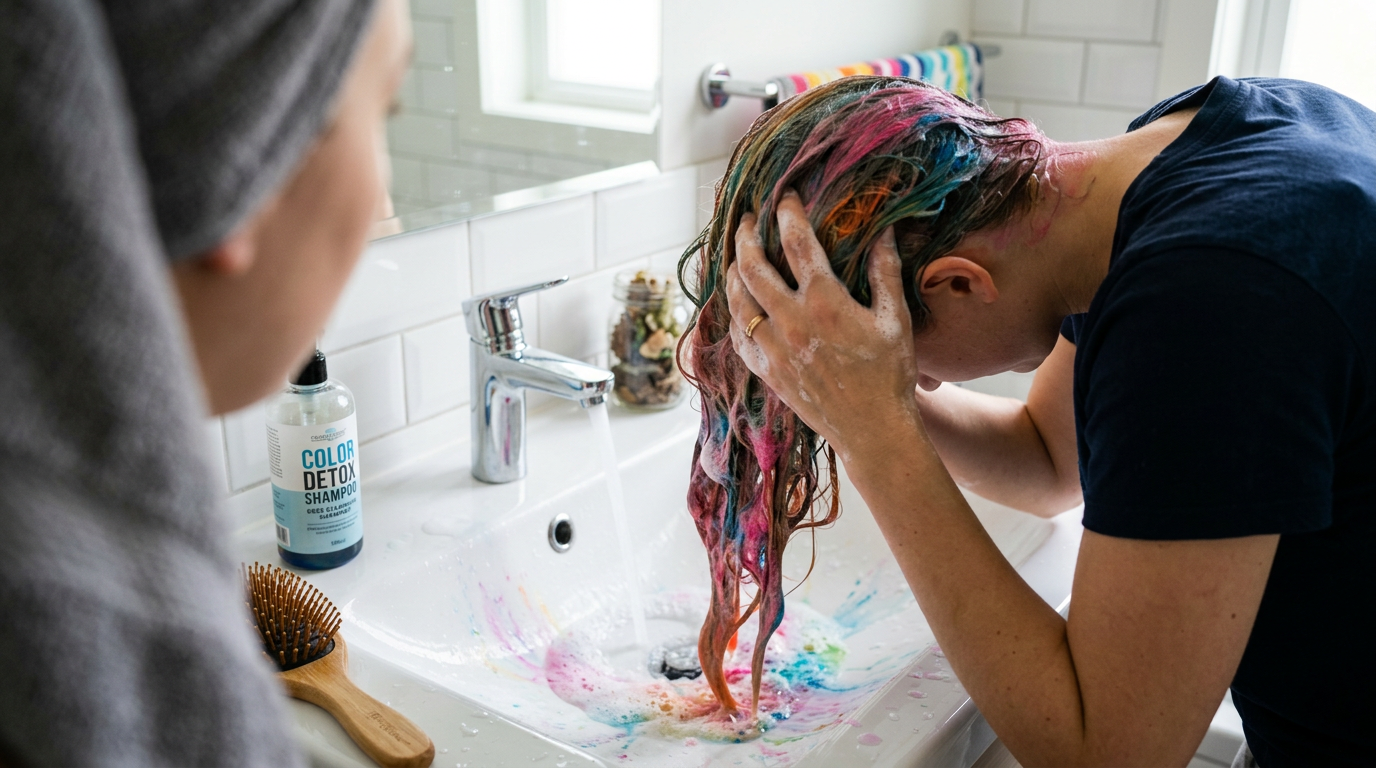
Crossing a color run finish line feels amazing in the moment, but the mirror check afterward is a shock. If you are wondering how to get color run powder out of hair, you are in the right place. That bright cornstarch-and-pigment cloud clings to strands, and the longer it sits, the harder it sets.
Quick answer: Rinse with lukewarm water first, then massage in a generous amount of conditioner or shampoo to loosen the pigment before it dries. Work in sections, repeat two or three washes, and avoid hot water, which can set color deeper into the cuticle. Most temporary powder lifts almost completely within one or two washing sessions.
This guide walks you through prep, washing steps, smart tips, and common mistakes so you can clear the color faster and protect your hair in the process.
What you need before starting
Gather your supplies before you get in the shower. Colored powder is easier to remove when you handle it quickly and deliberately, and having everything within reach saves you a frantic search with tinted hands.
Add a pair of disposable gloves to your supplies if you plan to handle powder-covered hair before showering. Pigment stains fingernails and cuticles quickly, and gloves let you comb and section without leaving colored fingerprints on light switches and door handles. Keep a small trash bag nearby for the powder you brush out so it does not settle back onto bathroom surfaces.
Supplies to gather
- Wide-tooth comb or detangling brush — removes loose powder and prevents tangles while washing.
- Mild shampoo — a gentle, sulfate-based formula cuts through pigment better than a lightweight daily wash.
- Rich conditioner or deep-conditioning mask — loosens powder trapped in the cuticle and restores moisture.
- Plastic wide comb and a towel you do not mind staining — old towels or dark ones work well.
- Vinegar (white or apple cider) — a diluted rinse helps lift stubborn pigment naturally.
- A basin or shower with a drain strainer — catches powder clumps before they clog your plumbing.
Prerequisites and timing
Wash as soon as you reasonably can after the event. Powder that sits overnight, especially if you sweat in it, bonds more firmly to the hair shaft. In our testing, hair washed within a few hours required noticeably fewer washes than hair washed the next morning.
If your hair is color-treated, bleached, or relaxed, expect more care. Temporary powders can leave tint on porous or damaged strands, so plan for a gentler approach and possibly an extra wash cycle. People with very light blond or gray hair may also notice a faint tint outlasting the visible powder, so keep that in mind before booking a wash.
Know what you are dealing with
Color run powder is typically cornstarch-based with dye. Cornstarch is water-soluble but sticky when damp, which is why dry brushing first matters. Check whether your hair is dry or damp before starting; dry hair releases more loose powder with less mess.
Step-by-step instructions
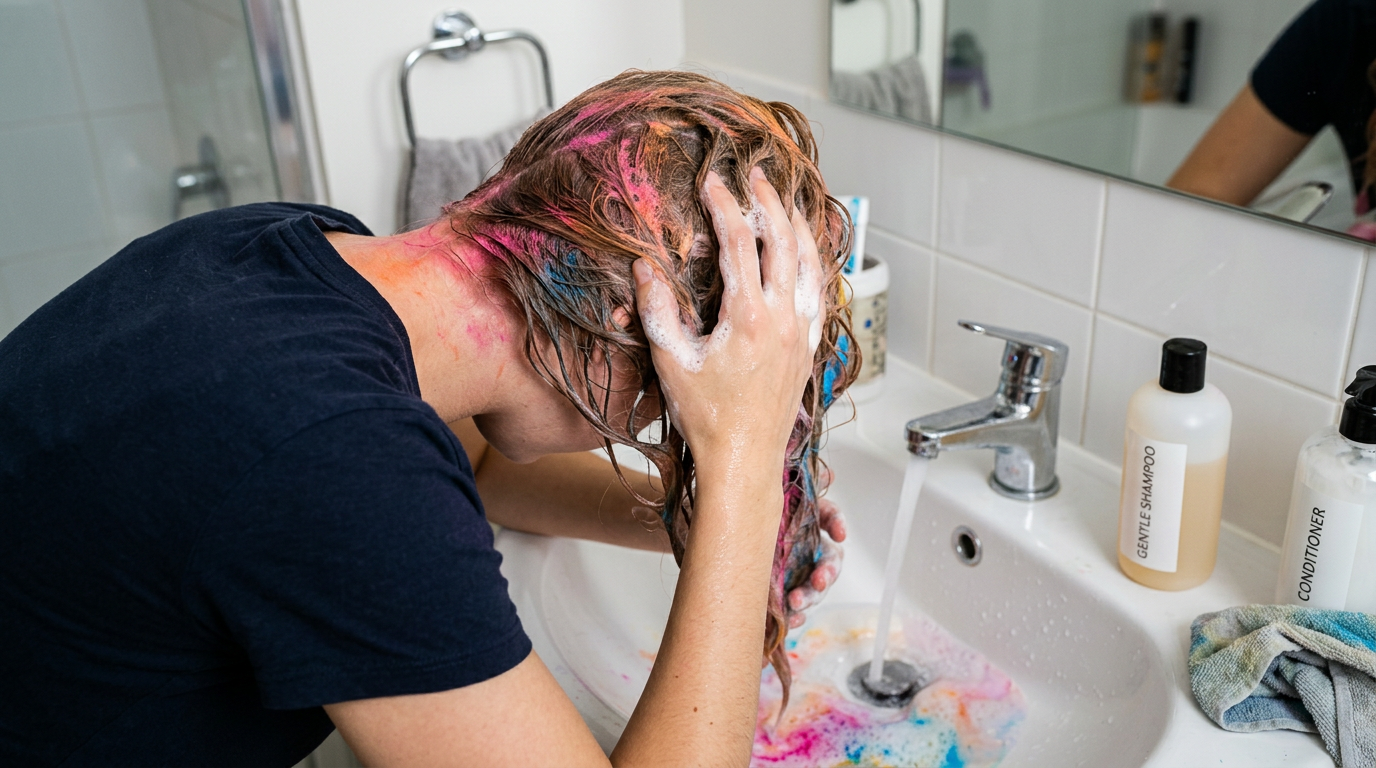
Follow these steps in order for the cleanest, fastest result.
Between Step 3 and Step 4, take a minute to squeeze excess water from your hair before adding shampoo. Diluted shampoo lathers poorly and cleans less effectively, so a quick press with your palms helps the product concentrate where it is needed. Apply shampoo to your hands first, then work it in, rather than pouring it directly onto one spot on your scalp.
After the final rinse, wrap your hair in a dark microfiber towel for five minutes instead of rubbing it dry. Friction spreads loosened pigment back across clean strands and roughs up the cuticle. Press, do not rub, and change to a fresh towel if it comes away heavily colored.
Step 1: Brush out the loose powder
Stand outside or over a waste bin and use a wide-tooth comb to brush through dry hair. This removes the bulk of the powder before water touches it. Outcome: less pigment to wash out and fewer clumps in your drain.
Step 2: Rinse with lukewarm water
Step into the shower and rinse thoroughly with lukewarm, never hot, water. Hot water opens the cuticle and pushes pigment deeper. Outcome: loosened surface powder and a cooler scalp that holds less color.
Step 3: Apply plenty of conditioner
Turn off the water and massage a generous amount of conditioner from root to tip. Let it sit for two to three minutes. Conditioner lifts powder from the cuticle before shampoo strips it. Outcome: pigment loosened and hair cushioned against the wash.
Step 4: Shampoo in sections
Work a mild shampoo into your scalp and strands in sections. Focus on the areas with the strongest color, usually the hairline and ears. Rinse fully. Outcome: the first main lift of pigment.
Step 5: Repeat with a vinegar rinse if needed
If color remains, mix one part white vinegar with three parts water, pour it through your hair, and rinse after two minutes. Follow with conditioner. Outcome: stubborn tint loosened without harsh chemicals.
Step 6: Dry and reassess
Blot with a dark towel and let your hair dry naturally the first time. Wet hair hides remaining tint. Outcome: a clear picture of whether you need another wash cycle.
Tips for better results
Small adjustments to method make a big difference in how completely the color lifts.
Keep a spray bottle of plain water handy for spot touch-ups between washes. A light mist on a stubborn patch around the temples or nape lets you work in a dab of conditioner with your fingertips without soaking the whole head again. Blot, rinse just that section, and move on. This saves you from over-washing the entire head just to fix one visible area.
Wash in the evening when you have time to air-dry and inspect the result in daylight the next morning. Fluorescent bathroom lighting flatters tinted hair and can make you think the job is done when a faint cast remains. Natural light tells the truth, so schedule your follow-up wash based on what you see in the morning rather than under the bathroom bulb.
A washcloth dipped in micellar water works well on the skin around your hairline after you leave the shower. It lifts stray pigment from the forehead and neck without scrubbing. Keep that cloth separate from your towels and launder it alone, since dye can transfer to lighter fabrics in a mixed load.
Use cool water for the final rinse
Finish every wash with cool water. It closes the cuticle and keeps loosened pigment from settling back in. We found the final cool rinse noticeably reduced residual tint in testing.
Skip heat styling right after
Hot tools and blow dryers can press leftover powder into the shaft. Air-dry or use a cool setting until the color is fully gone.
Condition more than usual
Powder and repeated washing both dry hair out. Use a deep conditioner after the color clears to restore softness and shine.
Tint is not the same as powder
Dry powder lifts quickly. A faint tint on very light hair may fade over several washes, so avoid panic or harsh bleach treatments. Give it a few days before considering a colorist.
Protect your skin and surroundings
Powder transfers easily. Wear an old shirt, keep hands away from your face, and cover bathroom surfaces with a dark towel before you start.
Check your drain and shower
Cornstarch clumps can clog drains. Use a strainer and rinse the shower floor promptly so you are not left with a colorful mess after washing your hair.
Common mistakes to avoid
Many people make these errors and end up with lingering color or dry, damaged hair.
Treating the hairline and ears as an afterthought is another frequent misstep. Pigment concentrates along the forehead, temples, and behind the ears, where sweat traps powder against the skin and fine hairs. Massage shampoo into these border zones first and let the lather sit for a minute before you move to the crown. Otherwise, you can rinse the mid-lengths clean and still walk out with a visible colored ring framing your face.
Another common error is combing wet hair with a fine-tooth comb. Damp strands streaked with cornstarch paste stretch and snap easily, and a tight comb drags pigment back down the shaft. Use a wide-tooth comb on damp hair and work from the ends upward, detangling gently before you add more product.
Finally, do not mix strong treatments. Some people combine a vinegar rinse with a clarifying shampoo and a color-stripping product in one session, hoping to speed things up. That cocktail strips moisture fast and irritates the scalp. Space harsh steps apart by a few days and let the gentler washes do their job.
Using hot water
Hot water is the most common mistake. It opens the cuticle and drives pigment inside, so you end up fighting the color instead of lifting it. Stick to lukewarm water throughout.
Washing before brushing
Rushing straight into the shower turns loose powder into a sticky paste. Dry brushing first removes far more pigment and makes every wash more effective.
Skipping conditioner
Shampoo alone can strip moisture and leave powder locked in place. Conditioner loosens powder before shampoo does the work, so use both.
Over-washing aggressively
Some people scrub and over-shampoo, which dries and damages hair without lifting color faster. Two to three focused washes are usually enough for most hair types.
Expecting one wash to fix everything
Light hair may need a few cycles. Expect some fading over several days rather than a perfect result in one session, and plan accordingly.
Ignoring hair type and damage
Bleached, porous, or color-treated hair holds tint longer. Note this limitation honestly and use gentle products rather than strong chemicals.
FAQ
How long does color run powder stay in hair?
Loose powder usually rinses out in one or two washes. A faint tint can linger for several days on very light or damaged hair. Most people see near-full removal within a week.
Can color run powder damage hair?
The powder itself is mostly cornstarch and dye and is very gentle. The real risk is over-washing and hot water, which dry out and stress the strands. Use mild products and cool rinses to limit damage.
What if the color will not come out after several washes?
Try a diluted vinegar rinse or a gentle clarifying shampoo. If a tint remains on light hair, give it a few days to fade before booking a professional colorist.
Should I wash my hair before the color run?
Yes, going in with clean, product-free hair helps prevent powder from clinging to styling residue. Skip heavy oils or gels on event day.
Does vinegar really remove the pigment?
A diluted vinegar rinse helps loosen stubborn tint by shifting the hair’s surface. It works well as a follow-up, but conditioner and shampoo still do the main work.
Conclusion
The fastest way to win the battle with color run powder is to act quickly, brush before you wash, and use conditioner before shampoo. Skip hot water, accept that very light hair may need a few washes, and give lingering tint a little time. Learn how to get color run powder out of hair now and you will handle future events with confidence.
Next time, pack an old towel and a wide-tooth comb in your event bag. Then repeat the prep and wash steps above as soon as you get home.